


The formulas offer a gentle introduction to basic natural perfumery, allowing you to learn through hands-on experience with blending, adjusting, and exploring aromatic materials. Each formula is intentionally minimal, featuring natural aromatics that are easy to work with and can be adapted to suit your needs.
Some ingredients may have maximum dermal limits; please check each material individually in Essential Oil Safety by Robert Tisserand and Rodney Young (2014).
The blends are unisex, focusing on the intrinsic beauty of the materials rather than conforming to traditional fragrance categories. You are encouraged to adapt them freely according to your personal preferences, mood, or creative direction.
The following formula is best suited to intermediate-level students with prior experience handling precious, rare, or highly viscous aromatic materials. It assumes familiarity with correct dilution practices, the careful blending of potent absolutes, and the precise handling of high-value ingredients. This exercise offers an opportunity to deepen your understanding of complex accords, refine sensory evaluation skills, and explore the emotional and olfactory layering that rare botanicals can bring to a composition.
Building Iris-Based Compositions
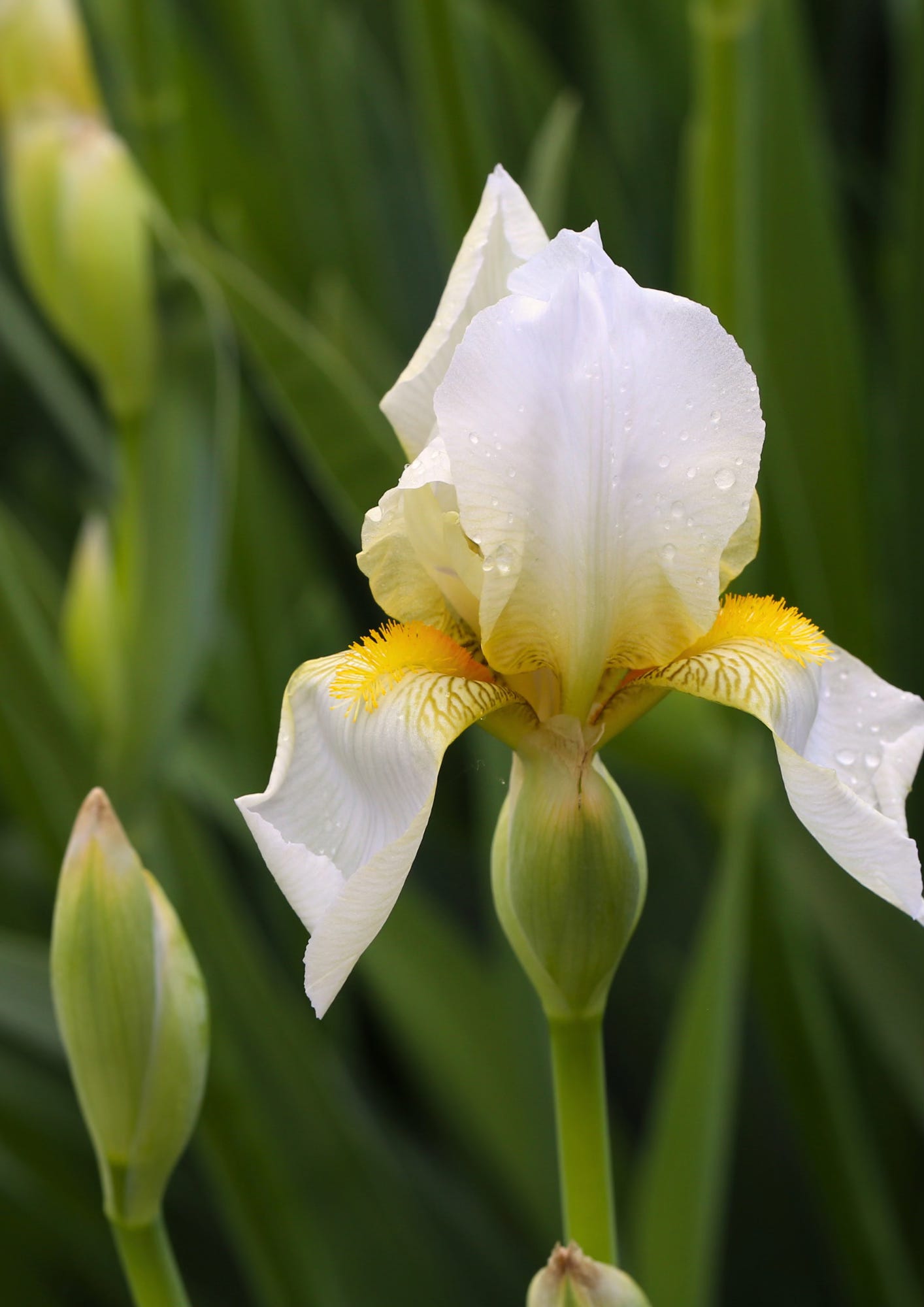
Many novice perfumers assume that the flower itself yields the characteristic cool, powdery facet; in reality, the scent derives from the rhizome. Although perfumery uses the underground part of the plant, the note is conventionally designated as ‘iris’ or ‘orris’. The choice depends on your intent: the former reads as more evocative and approachable, while the latter carries a more technical tone, though most connoisseurs will immediately recognise both the botanical source and the processed material.
Orris is among the most expensive perfumery materials (I have covered orris in earlier posts, see Archive). It occupies the heart–base transition, and while its retro profile is widely appreciated, it is rarely self-sufficient in a composition. A complete structure still requires depth, diffusion, and a distinct signature, materials that frame and anchor its refined, powdery, timeless character.